How to get the parts of a mixture back out again, and how to pick the right method.
KS3 · Ages 11–14About 20 minutes
Why does this matter?
Around two billion people don't have safe water at home. Filtering cloudy river water removes mud, but not germs. It is a first step, not the last. This is one of the UN Sustainable Development Goals. Goal 6: Clean Water and Sanitation (United Nations)
Phones and electric cars use lithium batteries. In Bolivia, lithium is collected from salty water by letting the Sun evaporate it in huge ponds. This is one of the UN Sustainable Development Goals. Goal 9: Industry, Innovation and Infrastructure (United Nations)
Some dyes are banned in food. Scientists split a food colour into its dyes and compare it with the banned one, to check.
What is a mixture?
A is when two or more substances are together, but each one stays the same. Nothing new is made, so you can separate them again.
Sand and water: a mixture.
Salty water: also a mixture, even though it looks clear.
Key words
Soluble
Able to dissolve in a liquid. Sugar is soluble in water.
Insoluble
Not able to dissolve. Sand is insoluble in water, so it stays as grains.
Solute
The substance that dissolves. In salty water, the salt is the solute.
Solvent
The liquid that does the dissolving. In salty water, the water is the solvent.
Solution
A solute dissolved in a solvent, like salty water. It is a mixture, and it stays clear.
Which method should I use?
What do you have?
Use
A solid that hasn't dissolved, in a liquid?
Filtration
Two solids of different sizes?
Sieving
Something dissolved, and you want the solid?
Evaporation
Something dissolved, and you want the liquid?
Distillation
Several dissolved colours?
Chromatography
1
Sieving
Sorts solid pieces by size.
How it works
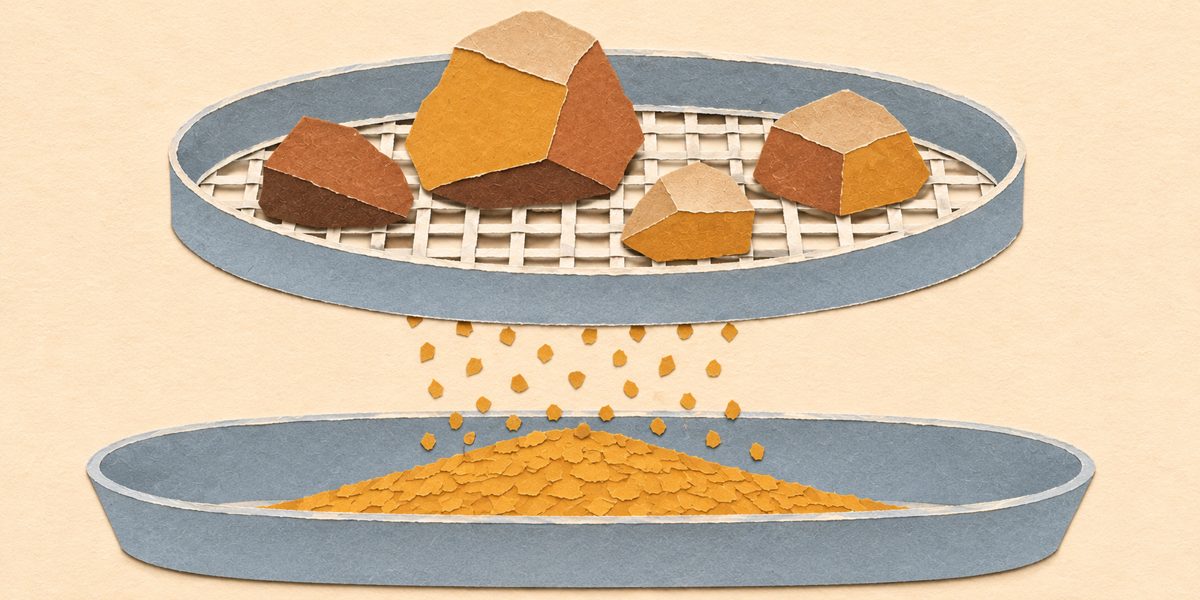
A sieve has holes. Small pieces fit through the holes and fall. Big pieces cannot, so they stay on top.
When to use it. Both parts are solid and one is bigger.
Method
1
Pour the mixture onto the sieve
2
Shake it
3
Small pieces fall through
Too big. The stones are bigger than the holes, so they stay on top.
Small enough. These grains are smaller than the holes, so they fall through into the dish.
The holes decide. The size of the holes decides which pieces fall through. Change the sieve and you change what you can separate.
Try it online: interactive on the lesson page at paperwize.pages.dev
Quick check Why can't sieving separate salt from sand?
2
Filtration
Catches a solid that hasn't dissolved.
How it works
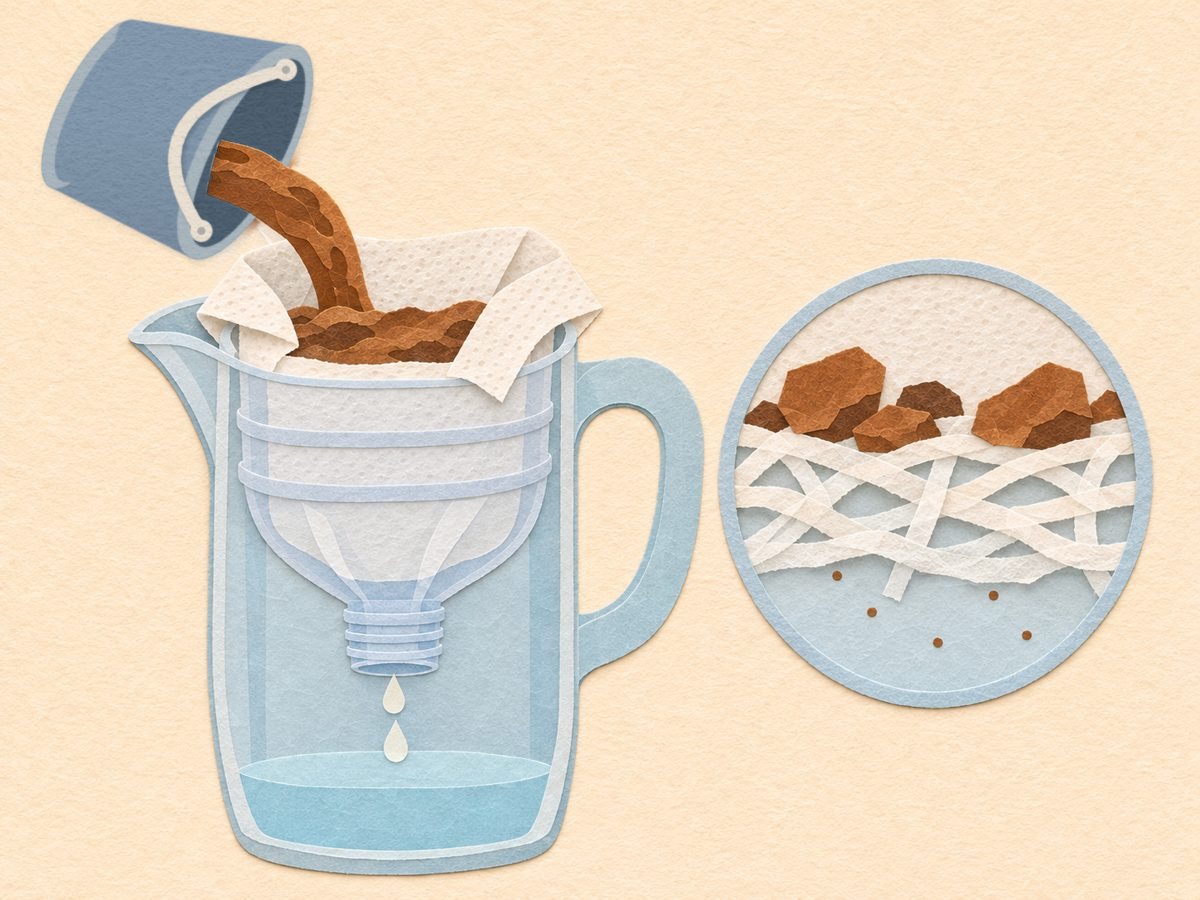
Filter paper has tiny holes. Water, and anything dissolved in it like salt, passes through. Solid pieces that have not dissolved are too big, so they get caught.
When to use it. A solid hasn't dissolved in a liquid, like sand in water.
Method
1
Leave very muddy water to settle. The mud sinks to the bottom ()
2
Pour the clear water off the top ()
3
Put filter paper in a funnel and pour the rest in
4
The drips through. The stays on the paper
Muddy water in. Muddy water is a mixture of water and tiny bits of soil that haven't dissolved.
Filter paper. The paper has tiny holes. Water and dissolved salt pass through. Pieces of soil are too big, so they are caught.
Filtrate. The clear liquid that drips through is called the filtrate.
Zoomed in. Close up, you can see the grains of soil piling up on the fibres. They're the residue.
Stretch
Real water-treatment plants use layers of sand and gravel, and then membranes with extremely tiny pores. The smaller the pores, the smaller the things caught, but the more pressure it needs.
Quick check Chalk powder and water are filtered. What is the residue?
3
Evaporation
Gets a dissolved solid back.
How it works
Heat makes water escape into the air as . The dissolved solid can't escape, so it's left behind.
When to use it. You want the dissolved solid, not the liquid.
Method
1
Pour the into a dish
2
Warm it, or leave it in the Sun
3
Dry solid is left in the dish
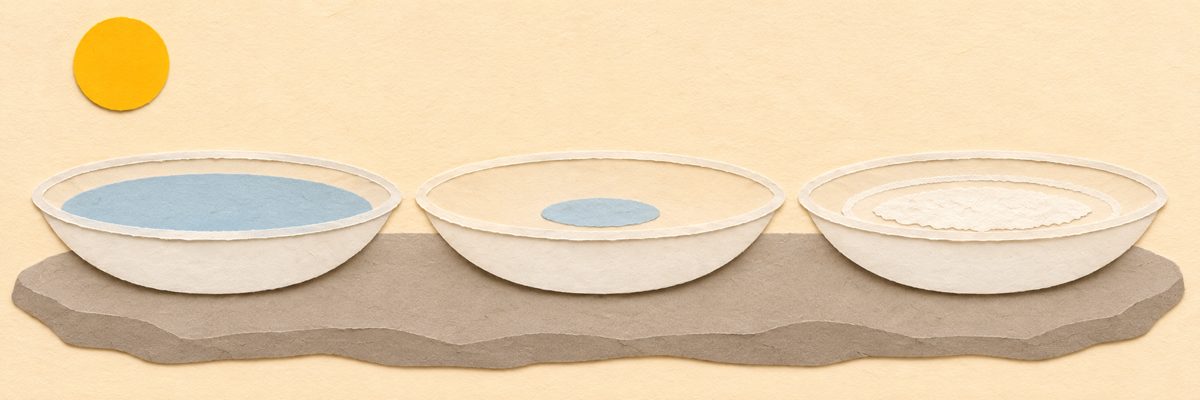
Heat from the Sun. The Sun's heat gives water particles the energy to escape from the surface.
Start: salty water. At the start the salt is dissolved in the water, so you can't see it.
Water leaves as vapour. As time passes there is less water. It hasn't vanished. It has become water vapour in the air.
Salt left behind. Salt can't evaporate at these temperatures, so it stays in the dish.
Quick check What happens when salty water is evaporated?
4
Simple distillation
Collects the liquid from a solution.
How it works
Heat the solution until the liquid boils. Cool the in a so it turns back into a liquid. Dissolved solids stay behind.
When to use it. You want the liquid, like pure water from salty water.
Method
1
Heat the salty water in the flask
2
The water boils and turns into . The salt stays in the flask
3
The vapour goes into the , where cold water flows around it
4
The vapour cools and into pure water. It drips into the beaker
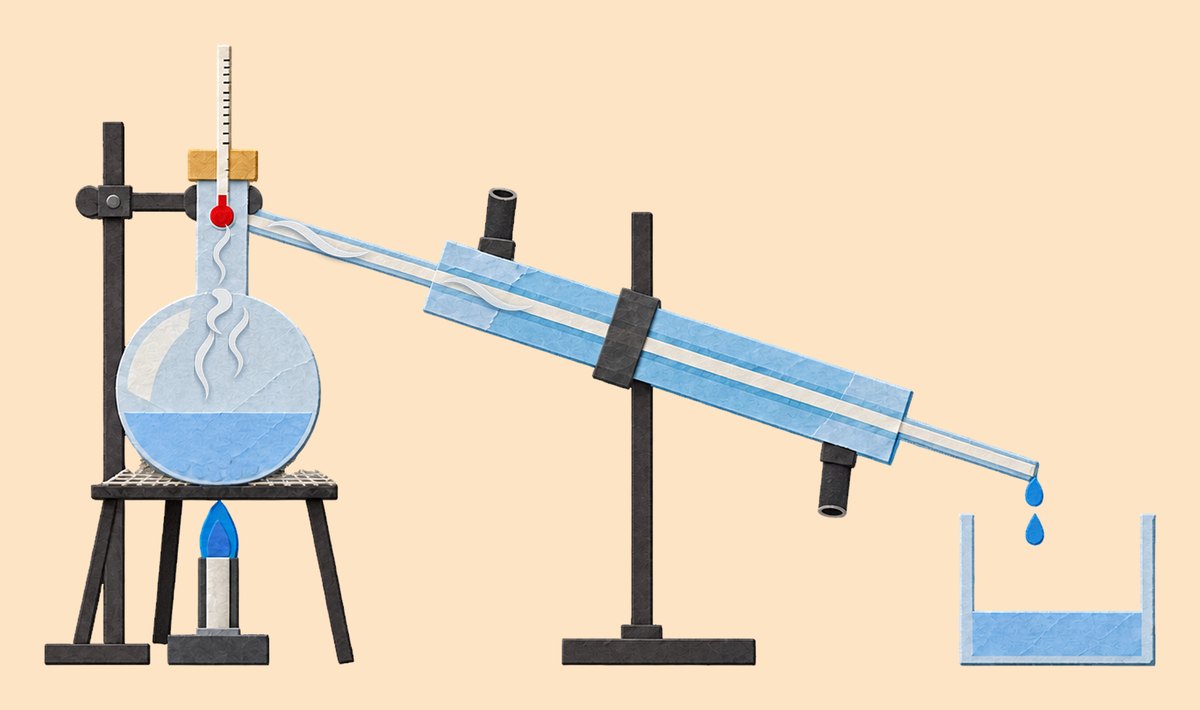
100 °C. The thermometer reads the temperature of the vapour. While pure water distils, it stays at about 100 °C.
Pure water vapour. Only the water boils off. The vapour is pure water. The salt does not boil, so it stays in the flask.
Salty water. The salty water is heated here. The water boils and turns into vapour.
Heat. The burner heats the flask until the water boils.
Vapour condenses in the condenser. The vapour touches the cold glass inside the condenser and turns back into liquid water.
Cooling water out. The cooling water flows out at the top, after it has taken heat from the vapour.
Cooling water in. Cold water flows in at the bottom, so the end of the condenser is the coldest part.
Water. Drops of pure water fall from the end of the condenser into the beaker.
Pure water. The water in the beaker is pure. It is called the distillate. The salt is left behind in the flask.
Try it online: interactive on the lesson page at paperwize.pages.dev
Stretch
Fractional distillation separates liquids with close boiling points, like ethanol (78 °C) and water (100 °C). It is how crude oil is split into petrol and diesel. Many modern desalination plants use membranes (reverse osmosis) instead of distilling.
Quick check Which part turns the vapour back into a liquid?
5
Chromatography
Splits dissolved substances, like the dyes in ink.
How it works
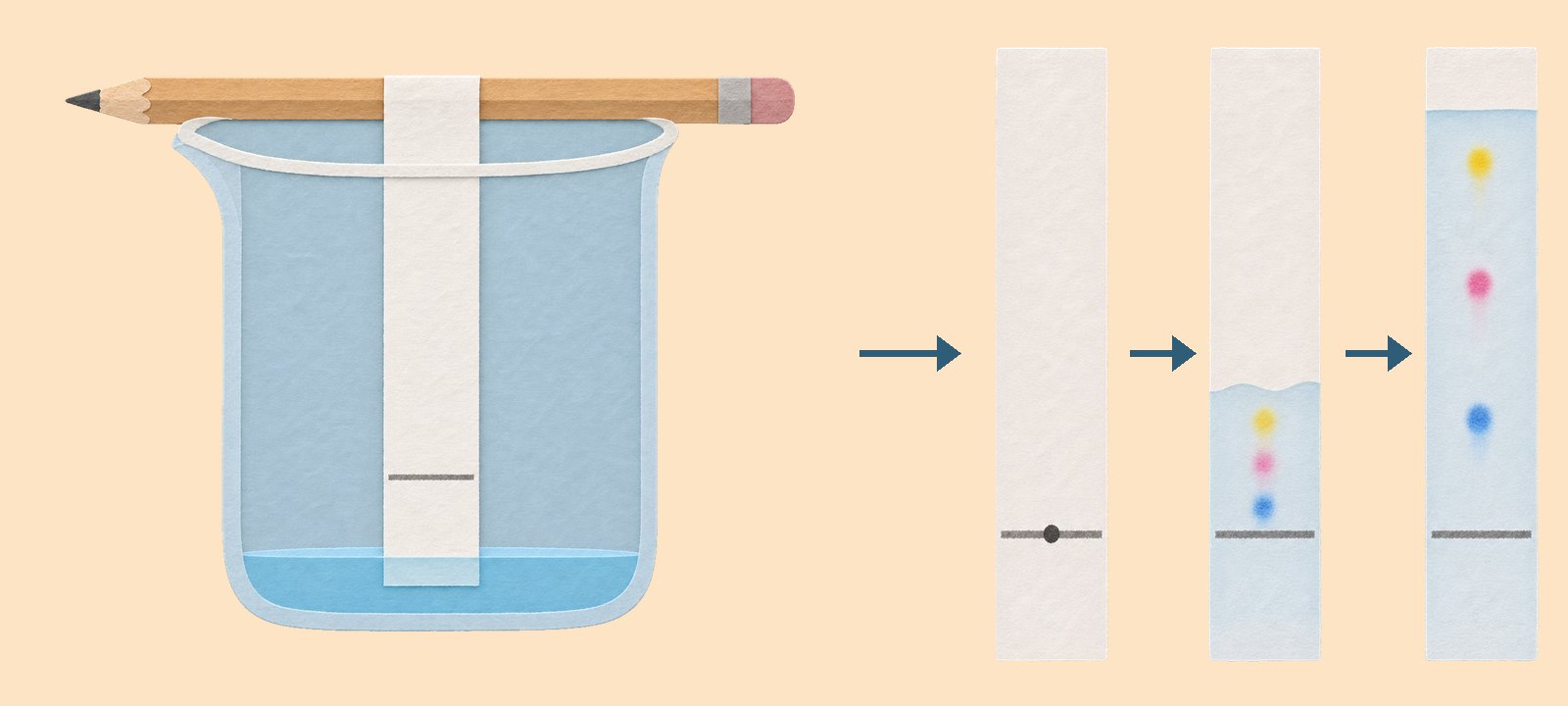
Water climbs up the paper and carries the dissolved dyes with it. A dye that sticks weakly to the paper travels far, and a dye that sticks strongly stays low, so the colours separate.
When to use it. You want to see which dyes are mixed together, for example to check a food or drink for a banned dye.
Method
1
Draw a pencil line near the bottom of the paper
2
Put a small spot of ink on the line
3
Hang the paper in a little water, with the line above the water
4
Wait. The water climbs the paper and the dyes separate
Water. A little water in the beaker. It climbs up the paper and carries the ink with it.
Pencil. The pencil holds the paper so it hangs in the water.
Chromatography paper. The paper soaks up the water, so the water moves up the paper.
Start line. The start line is drawn in pencil, because pencil does not dissolve. It stays above the water, so the ink does not wash away.
Ink spot. A spot of ink on the pencil line. The water has not reached it yet.
Water climbs. The water climbs up the paper. It carries the dyes up with it.
Dyes stop. Each dye stops at its own height. A dye that sticks strongly to the paper stays low. A dye that sticks weakly travels far.
Try it online: interactive on the lesson page at paperwize.pages.dev
Quick check A pen's ink gives three separate spots. What does that tell you?
Choose the method
Tap the best method for each mixture.
Not sure? Quick guide
A solid that hasn't dissolved, in a liquid? → Filtration
Two solids of different sizes? → Sieving
Something dissolved, and you want the solid? → Evaporation
Something dissolved, and you want the liquid? → Distillation
B. Each substance keeps its own properties. Nothing new is made in a mixture, so each substance keeps its properties and can be separated.
B. Solvent. The solvent is the liquid that does the dissolving. The salt is the solute.
C. Filtrate. Filtrate passes through. Residue is left on the paper. Distillate comes from distillation.
B. Dissolved salt is small enough to pass through. Dissolved particles are far smaller than the holes in filter paper, so they pass through with the water.
C. Distillation. Distillation condenses the vapour so the liquid is collected. Evaporation alone lets the water escape.
B. Pencil doesn't dissolve in the solvent. Ink would dissolve and run up the paper and confuse the result. Pencil doesn't dissolve.
A. A pure substance. Each different dye makes its own spot. One spot suggests one substance.
B. It stays behind in the flask. Salt's boiling point is far higher than water's, so it stays in the flask.
Choose the method
Sand and gravel: sieving. Both are solid, and the pieces are different sizes.
Tea leaves in a cup of tea: filtration. The leaves are insoluble solid in a liquid, so a strainer (a filter) catches them.
Salt dissolved in water, and you want the salt: evaporation. The salt is dissolved, so a filter won't catch it. Evaporating the water leaves the salt.
Salty water, and you want pure water: distillation. Distillation keeps the liquid by condensing the vapour.
The dyes in a green felt-tip pen: chromatography. Several dissolved dyes are separated by how far they travel on paper.
Mission
Clean water for a village: Let the mud settle, then pour off the clear water (decanting). Filter it to catch the rest of the mud. Filtering removes mud but not germs, so the water still needs treating before it is safe to drink.
Quick checks in the lesson
Sieving quick check: The pieces are about the same size. Sieving only works when one part is too big to fit through the holes. Salt and sand grains are both tiny.
Filtration quick check: The chalk. The residue is what's left on the paper. Chalk is insoluble, so it gets caught. The water is the filtrate.
Evaporation quick check: The water leaves and the salt stays. Water evaporates at much lower temperatures than salt can. The salt just stays in the dish.
Simple distillation quick check: The condenser. The condenser is kept cold, so vapour that touches it loses energy and condenses.
Chromatography quick check: The ink has at least three substances. Each spot is a different dye that travelled a different distance. A pure substance would give only one spot.